Authors:
Historic Era:
Historic Theme:
Subject:
Spring 2026 | Volume 71, Issue 2


Authors: John Ghazvinian
Historic Era:
Historic Theme:
Subject:
Spring 2026 | Volume 71, Issue 2


Editor’s Note: John Ghazvinian is an Iranian-born historian and former journalist. His recent book American and Iran: A History, 1720 to the Present offers a rich, fascinating overview of U.S.-Iran relations going back to America’s founding. Ghazvinian’s scholarship shows that the current rivalry between Iran and the U.S. was not inevitable; indeed, there was a time when relations between the two countries were “animated by a spirit of common respect and mutual understanding.” The following was adapted from that book.
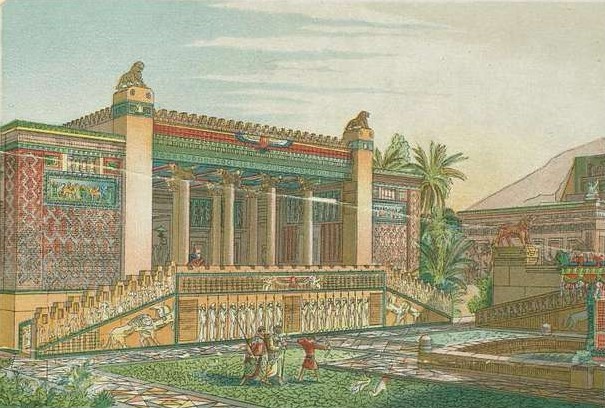
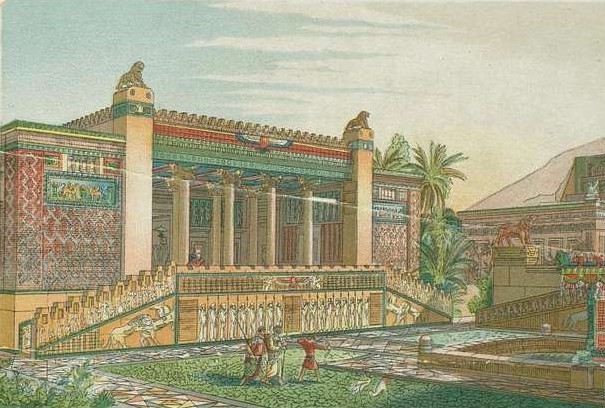
Once upon a time in Iran, there was a city that gave men butterflies. Centuries before the ayatollah, before the shah—before even Muhammad and Jesus Christ shook up their respective corners of the Middle East—the emperors of Persia had built one of the most magnificent capital cities the world had ever known. It was called Persepolis—literally, the "city of Persians." And such was its reputation that even the mightiest of princes, as they saw it coming slowly into view after days and weeks of trekking across the desert, could feel themselves reduced to nervous wrecks. Once a year, in ancient times, on the first day of spring, rulers of the twenty-eight great kingdoms that Persia had conquered were expected to journey to Persepolis to pay tribute to their lord and master, the “King of Kings." And they never failed to carry out this duty.
At its height in the fifth century B.C., the Persian Empire ruled over 60 million of the world's 100 million people—making Persepolis, for all intents and purposes, the capital city of all humanity. But like so many other imperial projects, the famous "city of Persians" long ago went the way of all souls. Burned and pillaged by Alexander the Great and his army of conquering Greeks in 330 B.C. (legend has it they required three thousand camels to cart away all its gold and jewels), its columns still reach proudly into the cloudless blue sky, in one of the most remote and unpopulated corners of Iran. Today, though, it is not Sogdian princes but busloads of tourists—Japanese, Germans, occasionally even Americans— who are driven across the vast, hot, and flat Morqab Plain to pay their tribute.
And as modern visitors scramble among ancient tombs and statues, snapping pictures and admiring what is left of the palaces of Darius and Xerxes, they often notice, just off to the side, a rusting metal grandstand—rows of empty spectator seating rising like bleachers at a high school football field. These are the
In October 1971 the Shah of Iran — Mohammad Reza Pahlavi, King of Kings, Light of the Aryans, Imperial Majesty and Commander-in-Chief of four hundred thousand fearsome (if somewhat modernized) Persian warriors — chose Persepolis as the backdrop for one of the most audacious, expensive, and self-indulgent spectacles of the modern era: celebrations marking the 2,500-year anniversary of the Iranian monarchy. Attempting to replicate the rituals of Persian emperors from centuries past, he summoned the world's most powerful leaders before the Apadana Palace and asked them to marvel at the greatness of his "empire."
Only this time Iran was picking up the tab. Ten kings, twenty-one princes and princesses, nine sheikhs, two sultans, a grand duke, a cardinal, sixteen presidents, three prime ministers, and four vice presidents were flown into Shiraz and transported — some by helicopter and some in red Mercedes limousines — across the desert to Persepolis, where four full days of feasting awaited them. Princess Grace of Monaco, King Hussein of Jordan, President Nikolai Podgorny of the USSR, Vice President Spiro Agnew of the United States — all mingled among balls and banquets, parades and performances, and a light and sound show described by observers as the "world's greatest fireworks display." At least six hundred journalists were also flown in, together with their satellite trucks and cameras, so that no corner of the globe would be deprived of its chance to witness the historic occasion. A five-and-a-half-hour feast went down in the Guinness Book of Records as the longest and most lavish in modern history.
No one ever found out how much all this feasting and festoonery ended up costing Iran. The shah's defenders suggested impossibly low figures around $4 million and claimed most of it came from "private business contributions," while his detractors threw around equally outlandish figures in the hundreds of millions (close to $2 billion in today's money). But whatever the exact figure, it did not look good. As French waiters poured liters of claret into the goblets of kings, in the eastern province of Sistan-Baluchistan, severe food shortages were driving villagers to the brink of famine. Even in Fars Province, where Persepolis was located, there had been reports of malnutrition, and the shah found himself facing awkward questions from the international press corps. At a Tehran news conference, a Swedish journalist asked him pointedly if he knew how much all the festivities were going to cost. "Do you know how much a kilo of meat and a kilo of bread cost?" the shah replied, just as pointedly. The journalist shook his head. "So why are you asking me?" the shah sniffed.
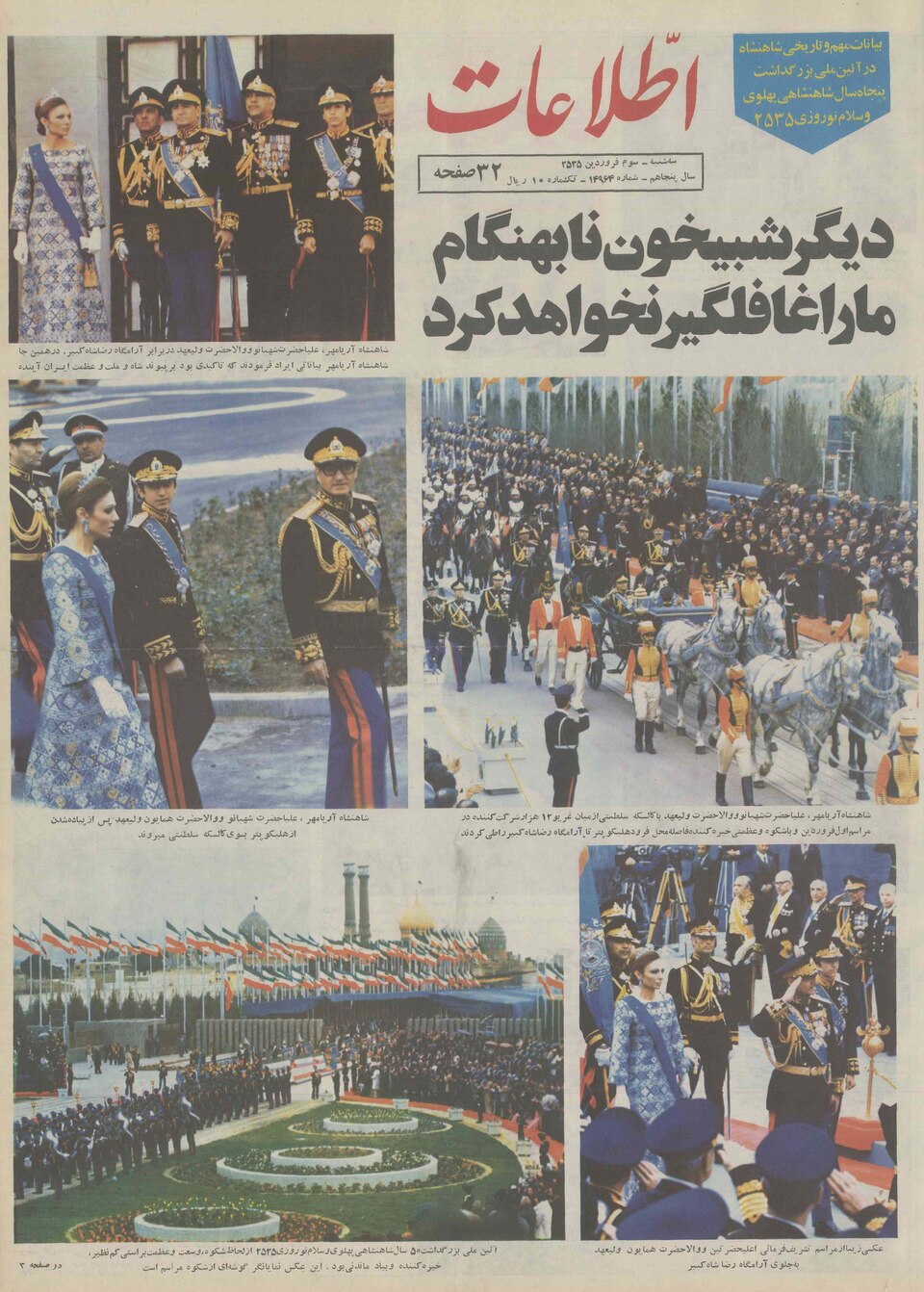
American journalists were a little gentler with the shah. In the United States, where the appetite for imperial pomp and pageantry was limitless, the Persepolis celebrations were met with squeals of delight. The Los Angeles Times reported that “there isn't likely to be [a celebration] to match it for another 25 centuries." The normally sedate New York Times marveled that "some of the emeralds in [Empress Farah's] crown were the size of golf balls. Her diamonds were only slightly smaller." The entire event was broadcast via satellite, and hosted by a young Barbara Walters on NBC, to an estimated audience of 10 million Americans. Orson Welles narrated the official documentary, Flames of Persia. And the U.S. chargé d'affaires in Tehran congratulated the event's organizer, telling him it was "the best exercise in public relations" he had ever seen.
The shah lapped it all up. Prideful, insecure, plagued by demons few around him fully understood, and constantly concerned with demonstrating the prestige of his ancient throne, the fifty-two-year-old monarch was never more at home than when he was basking in the praise of his American friends.
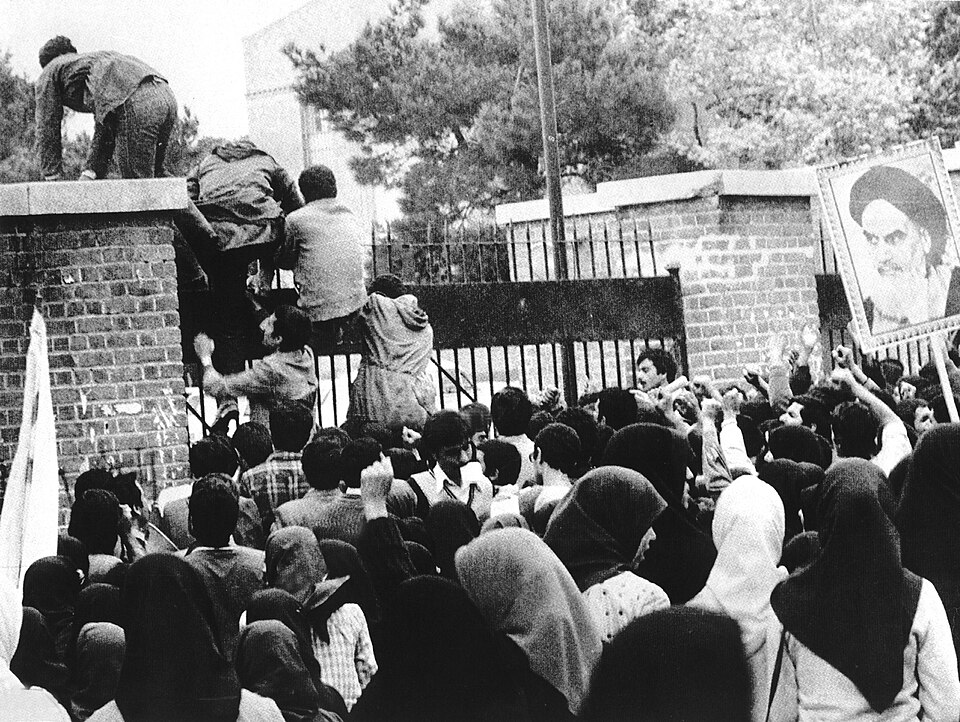
But ten years later he was dead. And so was the 2,500-year-old empire that he had gone to such lengths to celebrate. In the place of the shah was a man of God—an “ayatollah” in a black turban and a gray barbed-wire beard, whose eyebrows seemed permanently knitted in anger and whose open palm seemed permanently spread out over oceans of seething crowds, their fists rising and falling in unison as they rhythmically chanted Death to America! Death to America! In place of the imperial nation of Iran, the modern incarnation of the Persian Empire of centuries past, there was now something calling itself the "Islamic Republic"—severe, austere, a vast landscape of rage, painted only in shades of black, and mercilessly unforgiving of anything it deemed to be "Western arrogance.” In place of a cooing Barbara Walters, American television carried wall-to-wall programming about fifty-two hostages and their hellish ordeal at the hands of sweating Iranian revolutionaries.
Those ten fateful years — from 1971 to 1981 — were perhaps the most decisive, transformative, and unforgettable decade in the history of America's long and tortured relationship with Iran. For ten years, give or take, American military equipment had landed like snowflakes on the lap of a grateful shah. Chinook helicopters, F-14 Tomcats, Patton tanks, Sidewinder missiles — nothing was off-limits if the shah desired it. In Washington in 1972, Secretary of State Henry Kissinger gave him carte blanche, instructing the Pentagon that decisions about Iranian arms sales “should be left primarily to the government of Iran." And over the next few years, Iran quickly became the
But it was not just arms. By 1978 some fifty thousand Americans were living in Iran. "Technical advisers,” military contractors, schoolteachers, oil executives, development "experts," tour guides, archaeologists, hippies way-laid on the trail from Goa to Zanzibar — all of them, in one way or another, buying into the idea that Iran was a progressive, dynamic nation of the future that was benefiting handsomely from the hand of American friendship. And for the U.S. government, this was just about the best piece of news coming out of the Middle East. In Washington, the shah was seen as a much-needed alternative to the radical, troublesome, evil Arabs — less Muslim somehow, less threatening, more benign. The Arab world in the 1970s, seen from Washington, was a hopeless, never-ending psychodrama of airplane hijackings, bomb plots, socialist revolutions, and interminable wars with Israel. Just to the east, though, lay a more peaceful kingdom — a “natural ally" whose romantic Persian past, secular institutions, Western-educated elites, stable politics, and anti-Communist ruler made it a more reliable partner for the United States.
This was the most durable, dependable, reassuring alliance America enjoyed in the Middle East. And it had felt like it would never end. As late as December 1977 — just one week before the revolution broke out —President Jimmy Carter stood at a banquet in Tehran, raised his glass to the shah, and, repeating a phrase used by countless American officials since the 1950s, toasted Iran as an "island of stability in one of the more troubled regions of the world."
The equation worked just as powerfully in the other direction. For despite the ugsome spectacle of Vietnam in the 1960s, most Iranians still viewed America as a basically virtuous nation, in stark contrast to the European powers that had been divvying up the Middle East for decades. When the shah had come to power in 1941, Iran was still feeling the effects of nearly two centuries as a pawn in the imperial ambitions of Britain, Russia, and, to a lesser extent, France. Thus, whenever Iranians thought of "the West," their minds turned instinctively to the image of greedy, self-interested Europeans. But when they looked just a little further west, they saw a more benevolent power — a nation born out of opposition to empire and colonialism, infused with noble idealism, with a foreign policy that seemed largely selfless and respectful of the concerns of weaker nations.
Though this image of America had begun to fray by the 1970s, it still held sway with bourgeois elites in Iran and especially with the shah himself. Just as Americans looked past the radicalism of the Arab world and found a "nicer Middle East" on its periphery — one with a friendlier face and a reliable ally at its helm — Iranians looked past Europe and found a "nicer West" — one that seemed to live and breathe its liberal ideals and was ready to extend the hand of genuine partnership.
This idea that both Iran and the United States could reach beyond the countries that frustrated them and find a “natural ally” had a long pedigree, one that has not always been fully appreciated by historians. Decade after decade, dating back at least to the 1850s, successive Iranian governments had looked to the United States as a potential "third force” that could counteract the pressures from Britain and Russia. Decade after decade, Americans had looked to Iran as a mystical, benevolent, faraway Persian kingdom that seemed more appealing than the radical, hostile Arab world. This belief in an "alternative" force, lying just over the horizon, proved powerful and durable in both the American psyche and the Iranian—and arguably really fully disappeared only after 1979.
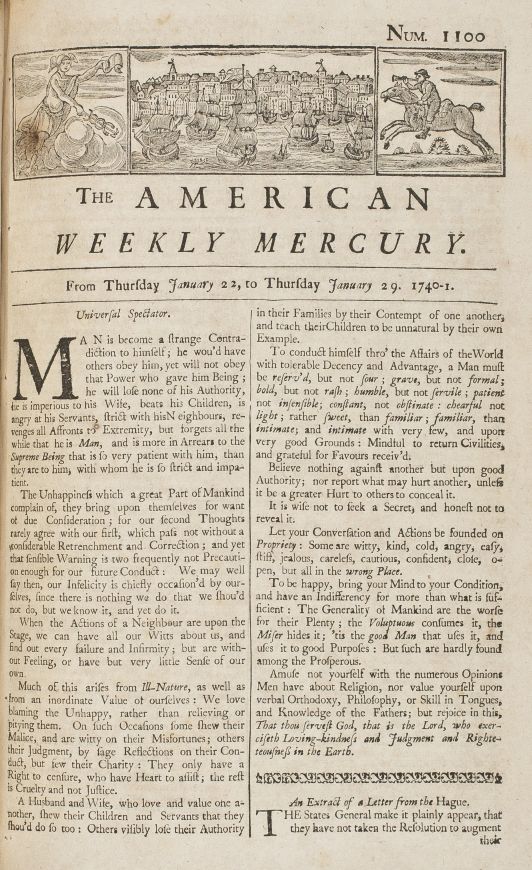
The very first newspapers published in North America, it turns out, were absolutely enchanted by Iran. In the 1720s, at a time when "the United States" had yet to come into existence, and Britain's North American colonies were largely a land of yeoman farmers, tobacco plantations, and quiet settler villagers, newspapers in Boston and Philadelphia reported regularly on events in the Persian Empire with a breathless, even hysterical energy. Week in and week out, publications like the Boston News-Letter, the Boston Gazette, and Philadelphia's American Weekly Mercury fell over one another to feed (and stoke) the public appetite for information about Persia. At one point, the Mercury was regularly devoting 25 to 30 percent of its column-inches to Persian affairs. In July 1724 the newspaper even led with a regretful note: "We have at present no News concerning" the situation, "neither do we hear anything from Persia." In the American colonies in the 1720s, the mere absence of news from Iran was a front-page story.
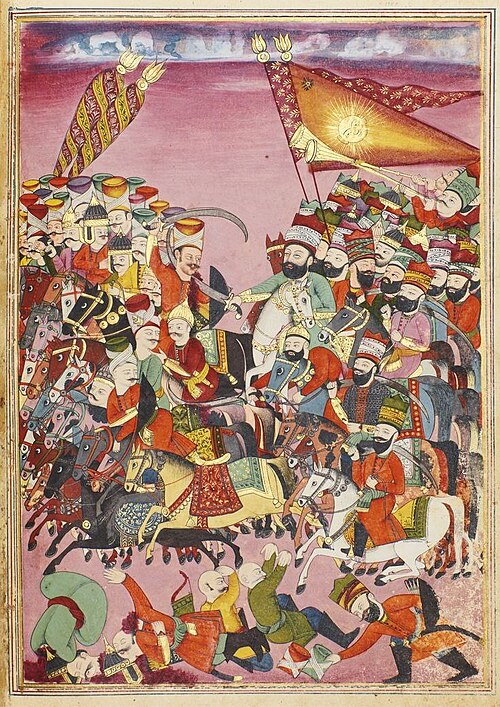
Though this might seem odd or surprising, the reason was fairly straightforward. In the summer of 1722, in the lawless Pashtun tribal regions of Kandahar, a revolt had broken out against the authority of the shah. The Afghan rebel Mahmud Hotaki, angered by Persian attempts to force his people to convert from Sunni to Shia Islam, had led an attack on Persian garrisons, then
The brutal siege had starved eighty thousand people to death and brought chaos to the Persian Empire. So it was merely the big news story of the day when Americans first started publishing newspapers. What was perhaps most extraordinary about the American press coverage though (at least from a twenty-first-century perspective) was how overtly one-sided it all was — or, rather, which side it took. The American media in the 1720s were uniformly, passionately, and unapologetically pro-Iranian.
As news trickled in from Persia during these years, colonial American newspapers went into overdrive, openly cheering for the Persian king to defeat "the usurper" Mahmud. In October 1723 the Boston Gazette reported with horror that “the Usurper . . . having possess'd himself of all the Riches of Persia, [now] puts all to Fire and Sword to establish his ill got Power." In July 1724 the Boston News-Letter was even more puffed up with outrage. Mahmud, it claimed, "was not satisfied with the barbarous Death & cruel Murder of [the shah], nor with the inhuman Cruelties committed upon all his affectionate Adherents, but has farther extended his Tyranny." It hoped someone would soon "extirpate the flagitious Tyrant, and cut his Adherents off the Face of the Earth."
Why would news of civil war in imperial Persia have aroused such passions in Massachusetts and Pennsylvania in 1722? And why would Americans have been so quick to take the side of the Persians? The answer, in part, has to do with the peculiar understanding that North Americans had of Middle East politics in this period. Because Mahmud had rebelled explicitly in the name of Sunni Islam against his Shia overlords, Americans believed he must have received encouragement, and even diplomatic recognition, from the hated Ottoman Empire.
To colonial Americans, this could mean only one thing: the rebellion was part of a larger proxy war between Sunni Ottoman Turks and their Shia Persian rivals the region's two great superpowers. It was another sign of the creeping expansionism of Ottoman Turkey, an evil empire that they had been told was a danger to Christendom — and to their very way of life.
In article after article, American newspapers blasted what they believed was a pattern of collusion between the Ottomans and the Afghan rebels. In May 1723 the Boston News-Letter reported angrily that the Ottoman sultan had sent "all kinds of Provisions & Ammunition" to support the uprising. In February 1724 the same newspaper told readers the whole rebellion had taken place “by the Instigation of the Ottoman Porte, which maintains an underhand Correspondence with" Mahmud. And in May 1724, when Isfahan finally fell, the New England Courant claimed "the Turks very much rejoyced at” hearing the news.
In the early eighteenth century, most white residents of North America still considered themselves loyal British subjects — as well as active participants in the broader world of European Christendom. And there was a history there. In 1683 the Ottoman Empire had laid siege to Vienna. One hundred and fifty years before that, the Ottomans had taken Hungary and the Balkans, and they now seemed to be threatening all of Christian Europe with their mighty armies. Worst of all, since the year 634, there had generally been some form of Turkish or Arab rule in Jerusalem, provoking Europeans to go on Crusades against the “infidel” Turks and their "occupation" of the Holy Land. Given this long history of confrontation between Christian Europe and its eastern periphery, Americans naturally felt hostile toward anything Turkish or Arab.
It was also easy to romanticize and idealize Persia simply because it was an avowed enemy of the Ottoman Empire. For decades, in fact, European monarchs had explored the possibility of Persian-European alliance against the Turks. It was the oldest political principle in the book: the enemy of my enemy is my friend.
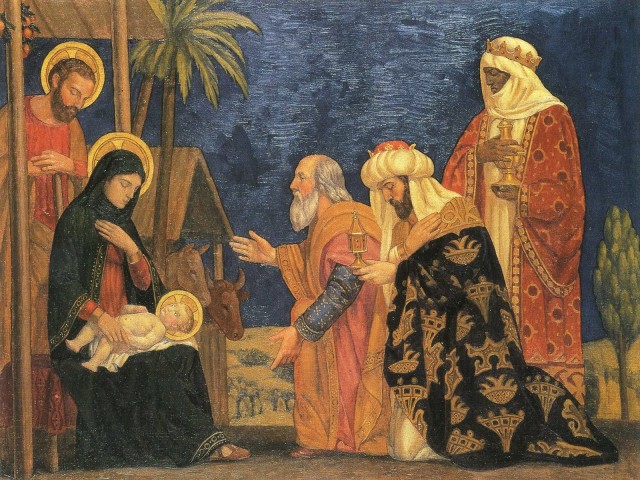
Politics, though, was only part of the story; there was also the complex matter of religion. For generations of New England Puritans, especially, raised on years of Sunday school and Bible study, Persia was forever the land of the Three Magi — the "wise men from the East" who had come to Bethlehem bearing gold, frankincense, and myrrh for the baby Jesus.
Persia was also the land of Cyrus the Great, the famous king who, in Ezra 1:1, is praised for liberating the Jews from the Babylonian captivity. By contrast, the Ottoman Empire was heir to the ancient kingdom of Babylon the hated empire whose name the Book of Revelation equates with every imaginable kind of evil. Even more important, because virtually every place described in the Bible was now under the control of the hated Ottomans, pious Christians felt the Turks had “defiled" all their holy sites — and their writings vividly reflected this. But just to the east of the sultan's dominions lay Persia a fairytale land, home to hardly a single location of biblical significance. By what must have seemed an extraordinary coincidence, the Persian Empire began just to the east of where Christians believed the Garden of Eden had been — just past the last of the major sites of biblical interest.
This kind of biblical interpretation of the Middle East, with all its skewed comparisons of Ottomans and Persians, both reflected and reinforced the political prejudices of the day. Books published in Britain at this time, widely consumed in
Travel books, scholarly accounts, religious manuals, and newspapers always referred to the "inhuman Turke" or the "terrible Turke" — while the Persians rarely received anything but praise. Almost on cue, whenever British travelers crossed from the Ottoman Empire into the shah's dominions, their tone brightened. Instead of condemnation and hatred, they expressed admiration and awe. The "Turkes be not comparable to the Persian for magnanimity and nobleness of mind," wrote one traveler. Another contrasted "the treachery, the covetousnesse, the wrath, the cruelties, the impietie, the wickednesse of these triumphing Turkes" with the “peace & tranquilitie” of the Persian villages. As for the shah, he was "verie absolute both in perfection of his bodies, and his minde,” and a Christian-Persian alliance could easily defeat the Turks.
Most impressive of all to British travelers was the legendary city of Isfahan—the grand new capital of the Persian Empire, with its broad, double-laned boulevards, reflecting pools, and magnificent palaces and mosques, all covered in turquoise. Home to six hundred thousand people at its height, Isfahan rivaled London for the distinction of the world's largest city in the seventeenth century. But London couldn't hope to compete with its beauty. European visitors were regularly rendered speechless when they arrived, struggling to describe what they saw.
Thus, when the Afghan revolt broke out in 1722, Americans were transfixed. After decades of hearing about the glories of the shahs — the heirs of Cyrus the Great and the wise Magi — Americans had developed an affinity both for Persia and for the Persian monarch. And they were incensed to find that he was now under assault from east and west by a crude axis of evil formed between the Turkish sultan and the Afghan rebels.
For the first time in history, and without fully understanding the conflict, Americans were becoming absorbed into a complicated world of Sunnis and Shias, Pashtuns and Persians. And they had no hesitation about taking sides.
Newspapers made heroic, if somewhat crude, attempts to help Americans understand the difference between Shia and Sunni Islam, and how this sectarian split had contributed to the conflict. Because the Persians were Shia—a minority sect viewed by most Muslims as heretical—some in America optimistically assumed that perhaps Persians were a little less Muslim or even not Muslim at all. (The conflict was sometimes described as a holy war between "Muslims and Persians.") One newspaper explained that Sunnis were followers of Muhammad and therefore were true Muslims, while the Shia were only "followers of Hali" or Ali. Another claimed the Persians
As the 1720s progressed, some colonial Americans displayed a budding "Persophilia" — a romantic idealization of Persian culture and Persian themes. Newspapers began carrying advertisements for Persian rugs. In 1724, The Persian Cromwell, a disparaging book about the life of Mahmud Hotaki, quickly made its way into libraries in the America colonies.
In 1729, Benjamin Franklin praised the ancient Persians for the value they placed on education and virtue and suggested Americans follow the example. Perhaps most tellingly, the writings of Cotton Mather — one of the most influential religious leaders in colonial America — were rich with pro-Persian sentiment. Though his writings were virulently anti-Islamic, he often went out of his way to point out examples of virtuous behavior by Persians — even suggesting that such stories should shame his fellow Christians into behaving more piously.
By 1727, a full five years after the Afghan rebellion, American interest in Persia showed no signs of abating. That year the Weekly Mercury ran a special nine-part series—a first for an American newspaper—explaining the background and chronology of recent events. In grueling, grisly detail, the Mercury reported on the extraordinary siege of Isfahan, depicting the Persians as victims of Sunni Afghan aggression. It described starving citizens examining human carcasses in the hope of finding bits of flesh to chew on, and mothers driven to feasting on their newborns. The shah himself was reduced to eating the flesh of his horses, it was written, just before he succumbed to the Afghans and ran weeping through the streets dressed in black. American readers learned that when the evil Mahmud was finally crowned, his victory parade required vast quantities of perfume to cover the stench of rotting corpses. “So many carcasses were thrown into the river,” reported the Mercury, that for a full year afterward "no Body could without Horror think of eating any Fish."
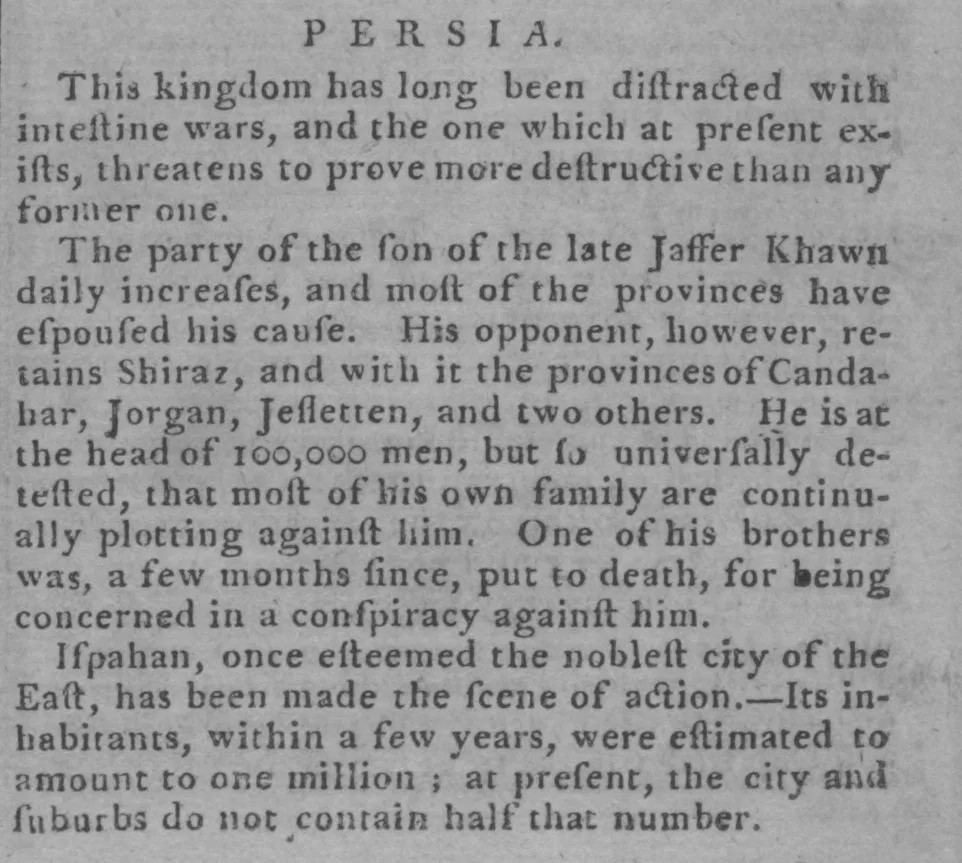
Never before had an American newspaper offered its readers this kind of sensationalistic, in-depth coverage of an international event, and the format proved a runaway success. Just twenty years earlier American newspapers had barely existed. The few that had appeared regularly were dry, dusty affairs, reprinting tired stories about European diplomacy culled from the
And that was not all. For the first time in history, Americans were demonstrating that very basic instinct that would become so vividly apparent by the 1970s—their willingness to believe that if they just reached over and beyond the infidel empire of the Middle East, they would find an idyllic civilization waiting in the periphery. A civilization that was somehow a little less Muslim, a little less Arab, a little less evil. For the first time, Americans had looked over at Persia and convinced themselves they were looking at a land ruled by a wise and enlightened shah whose interests overlapped considerably with their own.
There would be so much more where that came from.
For the remainder of the eighteenth century, Americans continued to display signs of this budding Persophilia, though not always with the same level of energy and visibility as in the 1720s. In 1761, "rich Persia carpets" were being advertised in Boston, and in 1774 a “very large Persian carpet" was auctioned in New York. In 1765, Harvard began offering its first lessons in the Persian language. And after the turmoil of the American Revolution subsided, leaders of the new republic proved no less interested in learning about Persia than they had been in earlier decades. If anything, the elites seemed to have a greater appetite for information—an appetite fueled, perhaps, by the realization that an independent United States could no longer rely on Britain to keep it informed about world affairs. In the 1790s and early 1800s, the influential Salem preacher William Bentley taught himself Persian and collected dozens of volumes of Persian literature—several of which he carefully annotated—including narratives of travels in Persia, discourses on Persian science and astronomy, Zoroastrian religious texts, and three Persian dictionaries.
The most obvious association Americans had with the name Persia, though, was still its ancient history. In the eighteenth and nineteenth centuries, ordinary Americans had an easy intimacy with the glories of the ancient Persian Empire—a form of cultural literacy that has entirely vanished in recent generations. Cyrus the Great was a household name, widely celebrated as the magnanimous ruler who had freed the Jews from Babylon (an act for which Protestants, full of millennial fixations, were eternally grateful). The names Xerxes and Darius tripped comfortably off the tongues of small children, in a way that would be hard to imagine today. Americans with even the most basic schooling had an awareness of the legendary empire of ancient Persia. Almost every schoolchild during these years learned the ABCs by memorizing the rhyming couplets of The New England Primer—meaning that five-year-olds across America associated the letter X not with xylophones but with the rhyme "Xerxes the Great did die, and so must you and I." Abbott's Histories, a series of biographical sketches of great leaders—and a staple
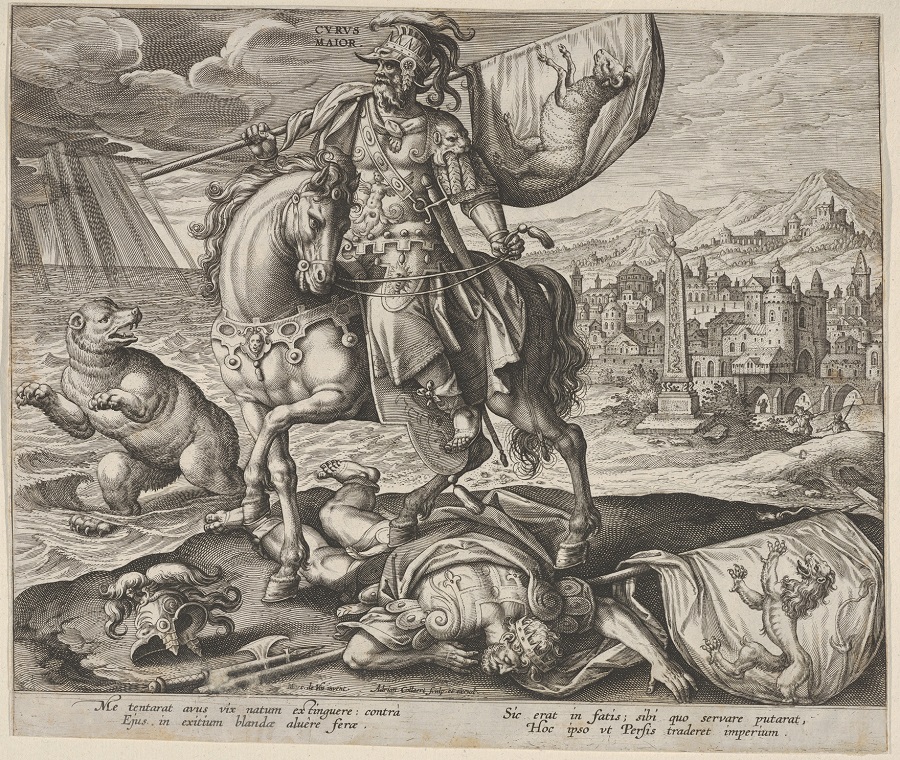
This appreciation for ancient Persia was particularly pronounced among America's Founding Fathers. Like other Enlightenment thinkers of the time, Benjamin Franklin, Thomas Jefferson, and James Madison—indeed, almost every person whose face appears on American currency today—were all intimately familiar with ancient Persian history. And they were particularly impressed by the legendary emperors Cyrus, Darius, and Xerxes, whose exemplary leadership abilities they saw as a potential model for the new republic. They drew much of their information from the Cyropaedia, a biography of Cyrus written by the ancient Greeks around 370 B.C., which describes Cyrus as a wise, just, and benevolent despot who relied on humanity and decency rather than brutality to secure the loyalty of his subjects. It is easy to see why this model would have appealed to early American leaders. The Cyropaedia was like a kinder, gentler version of Machiavelli—a prescription for leadership that emphasized the consent of citizens rather than the raw power of tyranny. Jefferson liked the book enough to own two copies, and evidence suggests he read them with enough care that he was able to point out inconsistencies between them. John Adams owned several, too, and wrote notes to himself in the margins. In 1783 his son, John Quincy Adams, was even advised by his mother to emulate Cyrus and avoid the temptations of excessive power.
As the nineteenth century wore on and the United States began to think of itself as a rapidly expanding continental empire, references to ancient Persia became commonplace in American culture. In 1854, during a Senate debate about the so-called "Nebraska question," Sen. Edward Everett argued that the Midwest would one day play a decisive role in American history, suggesting that "these infant territories . . . stand where Persia, Media and Assyria [once] stood in the continent of Asia, destined to hold the balance of power to be the centers of influence to the East and to the West.” Everett had taught Persian at Harvard forty years earlier, so perhaps the comparison came naturally to him. But he was not alone. Several American towns during this period changed their names to Media or Persia or even Cyrus. In 1834, Sylvanus Cobb, a prominent Universalist preacher from Maine, saw nothing strange in naming his twin sons Darius and Cyrus. And in 1858, David Dorr, a freed
It would be a huge exaggeration to say that Americans somehow "modeled" their new republic on Persian ideals. But if one browses through catalogs of early American libraries, it is striking to consistently see Persian tales and biographies of Cyrus side by side with the Christian prayer books and Greco-Roman histories one might expect to find. As they settled down to the hard work of building a new republic, this first generation of Americans—citizens of an independent United States—was prepared to cast its net far and wide in search of lessons and examples. And that even, occasionally, meant looking to Iran.
The Persians, meanwhile, had a similar fascination with and idealization of the United States—but it came about much later, and for much more practical, urgent reasons. For most of the eighteenth century, Persia was consumed by domestic political turmoil, and for most of the nineteenth century, with fending off the machinations and exploitative practices of the European powers. For Persia, these were difficult years. And the United States was not initially of great interest.
The legendary empire of the Persians never fully recovered from the Afghan raids of the 1720s. In the half-century that followed, the country was steadily reduced to chaos, anarchy, and seemingly endless tribal warfare. Not until 1794 was the pain of these years finally brought to an end by a new ruling dynasty, the Qajars, who would remain in power until 1925. The first two Qajar shahs quickly reconquered Georgia, which had intermittently slipped in and out of Persian control over the previous 250 years, and they solidified Persian sovereignty over the volatile eastern provinces around Khorasan and Afghanistan. And to cement their rule, they built a new imperial capital at the foothills of the Alborz Mountains—in a small village by the name of Tehran.
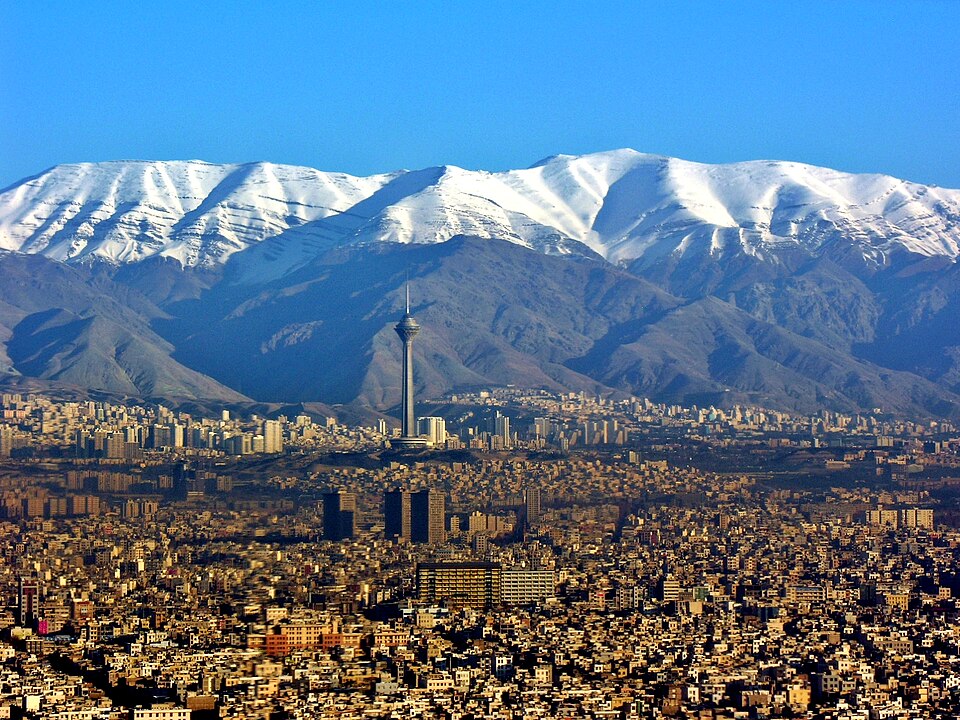
In their early days, the Qajars brought a measure of desperately needed political stability after nearly a century of turmoil. The second Qajar ruler, Fath Ali Shah, governed Persia from 1797 to 1834—a thirty-seven-year period notable for no major internal conflicts, steady growth in economic prosperity, and the return of prestige to the imperial court. Under Fath Ali Shah, a culture of grandeur and elaborate court ceremony—missing for nearly a century—reasserted itself in Persia. The new king presided over a renaissance in Persian arts and painting and endowed numerous new titles, thrones, and palaces, famously bedecking them with jewels larger than anyone had ever seen. And for the first time in history, Persia began to have serious, sustained political relations with
America, as far as anyone in Persia was concerned, was terra incognita—a savage continent full of wild, half-naked cannibals. Despite the turmoil of the eighteenth century, Persia still saw itself as one of the world's great empires, a proud and ancient civilization ruled by the Shahen Shah, the King of Kings, who sat on the famous Peacock Throne—studded with enough diamonds to buy North America several times over. In fact, for Persians, there was no such place as America, much less the United States. The name they used on the rare occasions when they discussed American affairs was yengi donya—a Turkish phrase meaning “new world.” In the imagination of Persians, yengi donya held a kind of mystical, almost fairytale allure—like a place that existed only in stories. In 1807, when the South Carolina gentleman Joel Roberts Poinsett* briefly crossed the border from Russia into Persia, he found the local tribal chief “knew something of France and England and more of Russia. . . . But of America, of the nation beyond the great waters he had merely heard and believed in its existence with the [scanty] faith with which he listened to an Arabian or Persian tale."
This is not to say that educated Persians were totally unaware of America. Visiting British diplomats frequently reported that America was “a subject upon which all Persians are very curious and inquisitive.” In the early 1800s, Persian-language books chronicled American history from the arrival of Columbus in Hispaniola to the War of Independence. Persian readers were even given a flavor of slavery and race relations in the United States, as one book explained how in America "people born with fair hair" were treated with respect while “darker people” were not. In 1809 the shah himself took an interest in America, asking the visiting British diplomat Harford Jones to tell him more about this "new world" he kept hearing about. "What sort of a place is it?" Fath Ali Shah asked Jones. "How do you get at it? Is it underground?”
Possibly the shah was being playful, or possibly he was ignorant. Either way, stories like this reflect the kind of atmosphere in which the subject of America was treated at the Qajar court in its early days. In the early 1800s, by and large, Persia thought it stood on top of the world and had little interest in a distant land of tobacco farms and small wooden churches.
It was only when living, breathing Americans began arriving in Persia in the 1830s—populating the mountain villages of the country's